
Blind Spot / The Active Recall Study System
Turn your notes into exam recall without blanking under pressure.
Blind Spot gives you a printable framework to test yourself with closed notes, catch hidden gaps early, and build proven recall before test day.
Built for university-level STEM and science curricula
The core problem
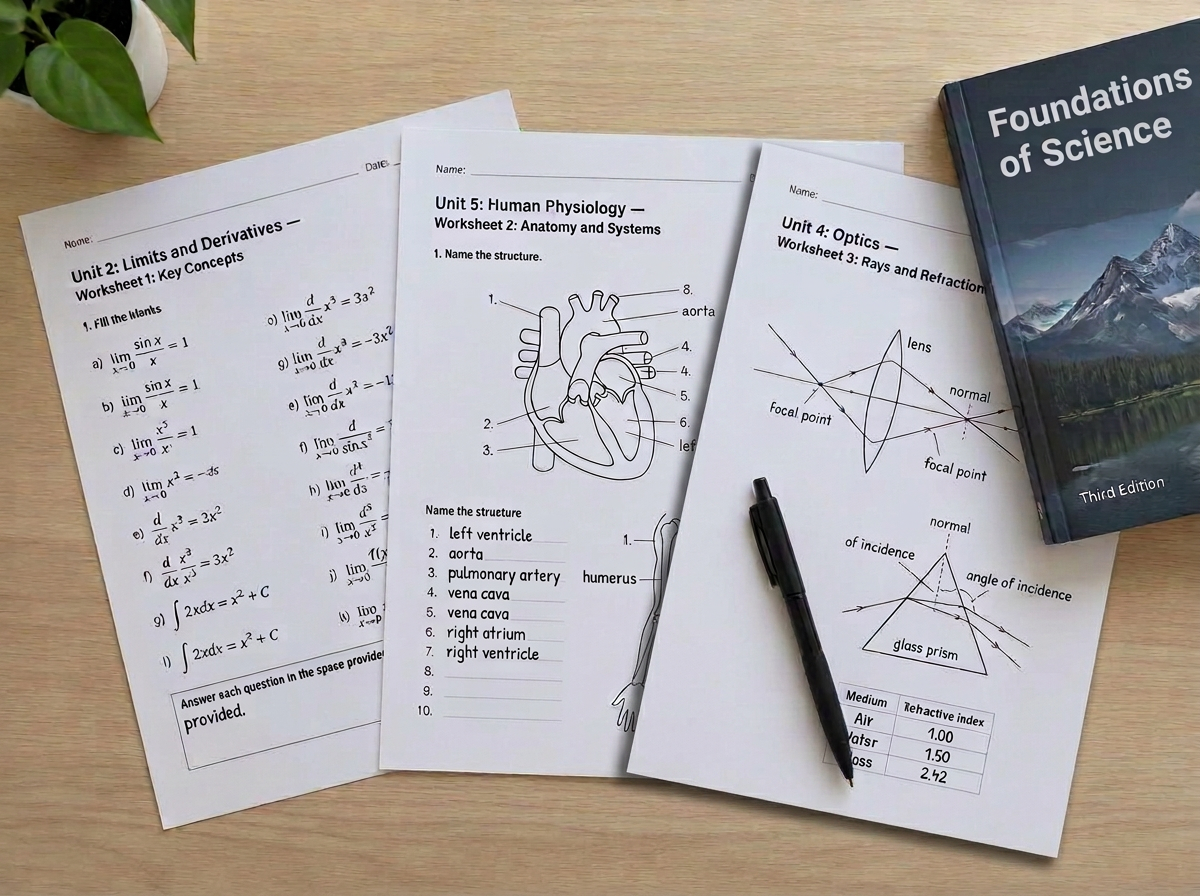
The Familiarity Trap
Rereading
builds familiarity
Retrieval
tests recall
You sit at your desk for days, reading slides and highlighting notes until every line looks familiar. But when you sit down for the exam, your mind freezes. That silent panic sets in because looking at an answer is not the same as pulling it from memory. Your brain recognizes the page, so it tricks you into feeling ready.
This failure is not your fault. You were taught that re-reading notes and reviewing solved problems counts as real preparation. In truth, following someone else's steps is like singing along with the radio. It feels smooth while the music plays, but when the music cuts out on test day, the words disappear. Homework gives you chapter titles that hand you the method, but the test gives you zero clues.
That disconnect leaves you exhausted, frustrated, and questioning your own ability. You lose points on questions you felt sure about, while peers who studied less walk away calm. The truth is simple: your brain never practiced producing the answers with closed notes. You do not have a memory flaw; you just walked into an invisible trap.
The opportunity
The Daily Loop: True Recall Before Test Day
Blind Spot changes how you use the study hours you already have. Instead of reading slides over and over, you turn your own class materials into paper questions. You close your notes, write your answers by hand, and check your work against the source. In forty focused minutes a day, you find out what you actually know and what you cannot yet produce.
Before you write each answer, you rate your confidence on a simple scale. When you feel certain about a topic but cannot answer it with closed notes, you uncover a blind spot. You log that exact sub-skill in your Gap Tracker with a scheduled review date. There are no bloated apps, no complex databases, and no extra study hours added to your week.
Imagine walking into your next exam with quiet calm. You hold a written paper record proving every weak spot was found and fixed weeks ago. When you turn over the test, the confusion is gone. You spot the right method right away, write your work cleanly, and finish with time to spare.
WHO IT IS FOR
STEM and Engineering Majors
You spend long library hours working through derivations and problem sets, yet struggle to choose the right formulas when exam problems lack chapter hints.
Pre-Med and Life Science Students
You read heavy biology slide decks and memorize terms, but your mind blanks during timed exams when questions demand exact, unassisted written explanations.
Disciplined Students Who Freeze Under Pressure
You attend every lecture and follow every study guide, but you need a proven way to catch hidden weak spots before test day arrives.
Find What You Cannot Recall Before Your Exam Does
- 01
Turn Your Own Notes Into Direct Questions
Stop staring at textbook pages and slides hoping they stick. You turn your exact class slides into pen-and-paper questions that test if you can solve the problem with your notes closed.
- 02
Catch Your Blind Spots Early
You rate your confidence before you write each answer. When you feel certain about a topic but draw a blank on paper, you catch that weakness weeks ahead of the test instead of during it.
- 03
Keep A Written Record Of Closed Gaps
You log each missed concept into a structured tracker. A gap only counts as closed when you write down physical proof that you solved it without looking at the answer key.
- 04
Use A Plan Built For Real Life
University life gets messy. The 30-day framework includes built-in flex days and a missed-day rule, so one busy night does not ruin your entire study plan.
Student perspectives
What changes when you test your recall.
Illustrative student testimonials from the supplied draft — not verified customer feedback.
"I used to read my slides four times and still freeze on midterm questions. Writing out the answers with my notes closed showed me what I actually knew."
"The error log helped me see why I kept losing points on derivations. It turns out I was picking the wrong starting method, not making simple slips."
Origin story
Why High Effort Was Not Leading To Exam Results
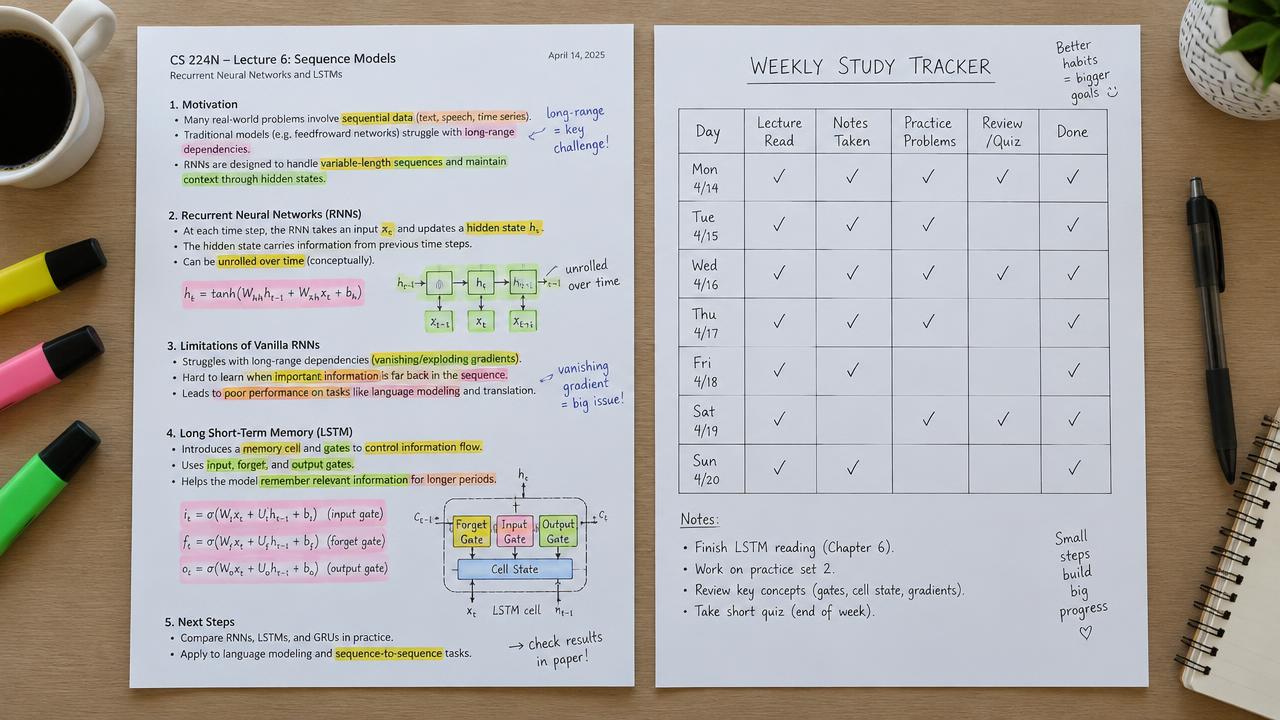
I spent semesters sitting at my desk until midnight, surrounded by highlighted engineering slides and rewritten notes. Everything on the page looked clear while I read it, so I walked into exam halls convinced I was ready. Then the proctor handed out the test. The chapter titles were gone, the formulas were not printed at the top, and my mind froze. I watched classmates finish early while I struggled to write the first line of work. The worst part was being told to just study harder or read the chapter again. The standard advice treated the problem like a lack of effort, but I was already spending all my free time at my desk.
The turning point came when I realized that recognizing an answer on a screen is completely different from retrieving it from memory. Reading a worked solution lets your brain follow along like a passenger. Taking an exam forces you to drive with no map. I stopped rereading my textbooks and forced myself to answer questions on blank paper with the source closed. Many topics I thought I knew turned out to be empty gaps, while others were solid. By logging those exact gaps and testing them on set review days, test-day panic disappeared. That diagnostic workflow became the Blind Spot study system.
HOW THE SYSTEM WORKS
SELECT AND EXTRACT FROM YOUR NOTES
Pick one subject and one chapter from your existing slides or textbook. Turn raw topics into specific sub-skills so you know exactly what needs testing.
TEST YOUR RECALL WITH CLOSED NOTES
Turn your materials into direct questions and write down your confidence score. Answer each question on paper with your notes closed, then check your answers.
LOG BLIND SPOTS IN THE GAP TRACKER
Mark topics you felt sure about but missed. Sort each gap by type, record your written proof of correction, and assign a review date.
FIX WEAK POINTS WITH A 30-DAY PLAN
Re-test your weak points on spaced review dates before test day. Built-in flex days keep your schedule intact even when college demands disrupt your week.
The investment
Choose how you start.
Founding price available for the first 50 buyers.
Free Starter
7-Day Challenge
$0
No card needed · 7 daily emails
- 7 daily walkthrough emails
- Simplified starter worksheets
- Find one hidden gap in one course
Founding Access
Blind Spot System
$15
One-time payment · Standard price $35
- The complete 15-file printable PDF system designed for black and white printing
- 00 Start Here one-page guide + 55-page Main Guide
- 6 technical worked examples + Question Generation Sheet
- Gap Tracker, Exam Error Log, and Weekly Review printable sheets
- The 30-Day Plan with built-in flex days and missed-day rules
Standard Access
Blind Spot System
$35
One-time payment
- The complete 15-file printable PDF system designed for black and white printing
- 00 Start Here one-page guide + 55-page Main Guide
- 6 technical worked examples + Question Generation Sheet
- Gap Tracker, Exam Error Log, and Weekly Review printable sheets
- The 30-Day Plan with built-in flex days and missed-day rules
Our 30-day refund policy
A Terms-Backed Commitment: Test The Mechanics With Zero Financial Risk
Most return policies on digital downloads do not make sense. Someone can click download, save every file to their desktop, and immediately ask for their money back without ever opening a page. That is not how this works.
This framework is built for serious students who actually intend to run the steps. Here is our terms-backed commitment:
Take Blind Spot and run it on your own lecture notes for up to 30 days. Print the blank worksheets included in your pack or use them in a note taking app. Work through the daily questions. Test yourself with the source material closed.
If you decide this is not the right approach for your coursework, email us within 30 days of purchase—preferably after your first week of testing and within your second week. Include your filled-in worksheets from the system so we can see that you actually ran the process.
We will review your work, and if the system did not deliver the practical clarity described here, we will return every dollar you paid. You take zero financial risk to test the mechanics on your own terms. Either it isolates your exact weak spots before you sit down for your exam, or you get your money back.
30-Day Action-Based Refund Policy · Completed worksheets required · Subject to review
Two possible exam days
Walking Into Your Next Exam With Written Proof
WITH ACTIVE GAP TRACKING
Imagine sitting down at your desk tomorrow. You open your actual lecture notes. You set a timer for 40 minutes.
You turn the main ideas into clear questions. You close the notes. You write the answers on paper from memory.
When you check your work against the slides, you know the truth right away. You do not have to guess whether you know the material. You see exactly what you can produce without help, and what you cannot.
You write the weak spot into your tracker. You give it a review date. Then you close your binder and walk away.
Your evening is actually free. You eat dinner without looking at slides on your phone. You sleep without that quiet dread in your chest.
Two weeks later, you walk into the exam hall. The proctor hands out the test. You flip the paper over.
There are no surprises. You do not freeze on question one. Every problem on that page is something you already tested with your notes closed. You know which method to pick because you practiced choosing methods without chapter hints. You write your steps with steady hands.
WITH PASSIVE REVIEW
You keep doing what you did last term. You sit in the library until midnight rereading the same slide deck three times. Everything looks familiar on the screen, so you tell yourself you are ready.
Then exam morning arrives. The questions strip away the chapter titles. The worked solutions are gone. Your mind goes completely blank.
You sit there in silence, realizing too late that recognizing a concept is not the same as recalling it from memory. When the graded paper comes back, you write it off as another careless error, but the missing points are still gone.
You do not need more desk hours. You do not need another color-coded calendar that falls apart by Wednesday.
You just need to find what you cannot produce while there is still time to fix it on your own terms.
Before you start
Frequently Asked Objections Before Starting
My course is technical and unique. My professor writes bizarre problems, so how can a framework work for my syllabus?
I do not have time to set up an elaborate system when my exam is only two weeks away.
Active recall works for memorizing vocabulary, but does it work for heavy problem-solving courses like engineering or math?
What if testing myself shows that my knowledge is weak and I fall behind?
Is this going to add more hours to my already packed weekly workload?
The details